Introduction
I don't remember exactly how I reached my first Divine Beast in Breath of the Wild. I couldn't tell you which shrine I completed beforehand or what weapon I happened to be carrying at the time.
I do remember spotting a strange dragon flying through the sky and immediately abandoning whatever objective I had been working toward. I remember climbing mountains simply because they looked interesting and gliding into valleys with absolutely no plan in mind. Most of all, I remember the feeling that Hyrule was constantly rewarding my curiosity in ways I hadn't expected.
That's probably why Breath of the Wild continues to resonate with so many players years later. It isn't just an open world filled with things to do. It's a world designed to encourage questions.
"Can I climb that mountain?"
"What happens if I cook these ingredients together?"
"Why does that rock formation look so unusual?"
More often than not, the answer leads somewhere worth remembering.
1. Why Breath of the Wild Rewards Curiosity
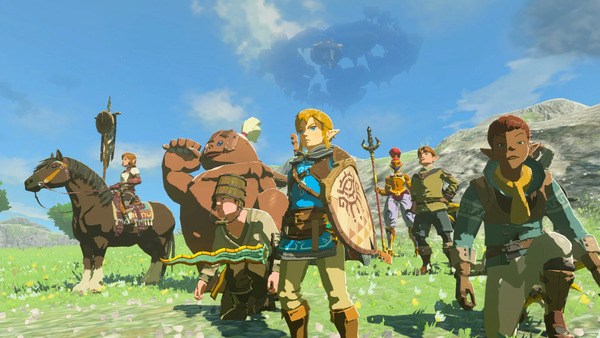
One of the smartest decisions Nintendo made was resisting the urge to explain everything. Breath of the Wild trusts players to experiment, fail occasionally, and learn through experience. As a result, many of the game's best moments feel earned rather than scripted.
1.1 The Great Plateau Teaches Without Overexplaining
The Great Plateau serves as Breath of the Wild's tutorial area, but it rarely feels like a traditional tutorial. Instead of bombarding players with instructions, it introduces ideas and then encourages experimentation.
You learn that climbing expands your options because there are cliffs worth scaling. You discover how temperature affects survival by venturing into colder areas. The game presents problems and quietly allows you to figure things out.
By the time Link finally leaves the plateau, players understand far more than they realize.
1.2 The Best Discoveries Usually Happen by Accident
Ask Breath of the Wild players about their favorite memories, and most won't describe following quest markers.
Instead, they'll tell stories.
They'll talk about stumbling across a hidden shrine while searching for ingredients or discovering a Korok puzzle after investigating a suspicious circle of rocks. Someone else probably chased a shooting star for twenty minutes before completely forgetting what they had originally planned to do.
Those experiences happen because the game consistently rewards curiosity.
1.3 Objectives Aren't Always the Most Interesting Part
At some point during my first playthrough, I realized I was spending more time pursuing distractions than actual objectives.
Oddly enough, that wasn't a problem.
Breath of the Wild understands that exploration becomes more meaningful when players choose their own priorities. Sometimes that means tackling major story content. Other times, it means climbing a mountain because the view looks promising.
Both approaches feel valid.
1.4 Asking "What If?" Leads to Better Adventures
Many of Hyrule's best secrets begin with a simple question.
- What happens if I investigate that unusual landmark?
- Can I reach the top of that cliff?
- Why are those flowers arranged like that?
- Is there another solution to this puzzle?
The game rarely discourages experimentation. Even when curiosity doesn't produce immediate rewards, it often leads to memorable experiences.
1.5 Why Hyrule Feels So Personal
No two players experience Breath of the Wild in exactly the same way.
One person may spend hours hunting Korok Seeds, while someone else prioritizes shrines or combat challenges. Another player might dedicate entire sessions to wandering aimlessly across the countryside simply because they enjoy the atmosphere.
That flexibility gives Hyrule a uniquely personal quality. The stories players tell afterward aren't identical because their adventures weren't identical.
2. Environmental Secrets Hidden in Plain Sight
The first few hours of Breath of the Wild can be slightly deceptive. Hyrule looks beautiful, but it's easy to assume that much of the environment exists primarily for decoration.
Then you accidentally set a field on fire and use the resulting updraft to reach a location you couldn't climb normally.
Suddenly, the world feels very different.
2.1 Fire Does More Than Cook Food
Most players quickly understand that campfires provide warmth and cooking opportunities. What the game doesn't emphasize immediately is how versatile fire can become during exploration.
Burning patches of grass create upward currents that interact with the paraglider, allowing Link to gain altitude in creative ways. During combat, fire can spread through enemy camps and alter encounters dramatically.
Hyrule rewards people willing to experiment.
Sometimes that experimentation simply happens to involve questionable fire safety practices.
2.2 Thunderstorms Affect Everyone Equally
The first time lightning nearly struck Link because I forgot to unequip a metal sword, I assumed the game was punishing carelessness.
Later, I realized enemies obeyed the same rules.
Watching a Bokoblin stubbornly cling to a metal weapon during a thunderstorm taught me an important lesson: Hyrule operates according to consistent systems. Weather isn't just atmospheric decoration. It actively shapes the world.

2.3 Boulders Solve More Problems Than Expected
There are sophisticated combat strategies in Breath of the Wild.
Rolling a giant rock downhill toward unsuspecting enemies is not one of them.
It's also remarkably effective.
Environmental interactions frequently provide alternative solutions to direct confrontation. Sometimes the smartest move isn't engaging in combat at all. It's observing your surroundings and letting physics do the heavy lifting.
2.4 Explosive Barrels Usually Aren't Subtle
Nintendo occasionally demonstrates admirable restraint.
Explosive barrels positioned next to enemy camps are not one of those occasions.
The message is fairly clear.
You can rush into battle swinging your strongest weapon, or you can take advantage of opportunities the environment provides. Breath of the Wild consistently rewards players who pause long enough to assess the situation.
2.5 Why These Interactions Matter
The environment feels meaningful because it responds to player choices.
Fire spreads.
Weather changes outcomes.
Objects interact with one another.
As a result, Hyrule becomes more than a backdrop for Link's adventure. It transforms into a system players can understand, manipulate, and occasionally exploit in spectacular fashion.
3. Cooking Mechanics the Game Never Fully Explains
Cooking appears straightforward at first.
You combine ingredients, restore hearts, and continue exploring.
Then you realize certain meals increase stamina, improve stealth, provide environmental resistance, or offer combat advantages. Before long, you're enthusiastically tossing mushrooms and fish into cooking pots while hoping the results are edible.
Link deserves a great deal of credit for his optimism.
3.1 Most Players Learn Through Trial and Error
The game provides recipes occasionally, but experimentation remains the primary teacher.
Some combinations produce useful effects.
Others produce dishes that seem questionable at best.
That unpredictability makes cooking surprisingly engaging because discoveries feel personal rather than predetermined.
3.2 Ingredients Matter More Than Exact Recipes
Understanding ingredient categories often proves more valuable than memorizing specific combinations.
| Ingredient Type |
Common Benefit |
| Hearty |
Extra hearts |
| Mighty |
Increased attack power |
| Sneaky |
Improved stealth |
| Spicy |
Cold resistance |
| Chilly |
Heat resistance |
Table 1. Ingredient Effects Worth Remembering
Note: Experimentation remains one of the most enjoyable parts of the cooking system.
3.3 Preparation Reduces Frustration
Venturing into freezing mountains without proper meals rarely ends well.
The same applies to volcanic regions and challenging encounters. Spending a few minutes preparing before major adventures often saves considerably more time later.
Planning becomes part of exploration rather than an obstacle to it.
3.4 Experimentation Is More Fun Than Optimization
There are undoubtedly efficient recipes available online.
However, some of the cooking system's charm comes from discovering useful combinations independently. Accidentally creating an incredibly effective meal often feels more rewarding than following instructions perfectly.
3.5 Meals Solve Problems Before They Begin
Extra stamina simplifies climbing.
Resistance effects improve survival.
Temporary bonuses support combat.
Cooking doesn't merely react to challenges.
It prepares players for them.
4. Horses Are More Helpful Than You Think
Like many players, I ignored horses for an embarrassingly long time.
Fast travel existed. Climbing mountains was fun. Gliding across valleys felt efficient.
Eventually, I decided to ride between villages simply to enjoy the scenery.
It completely changed how I experienced Hyrule.
4.1 Horses Encourage Slower Exploration
Moving at a slightly slower pace naturally increases awareness.
Shrines become easier to spot. NPC encounters feel less rushed. Small details hidden alongside roads receive the attention they deserve.
Exploration shifts from efficiency toward appreciation.
4.2 Roads Often Lead Somewhere Interesting
Traveling by horseback frequently produces unexpected discoveries.
You encounter merchants, investigate unusual landmarks, and stumble across opportunities that constant fast travel might overlook.
Sometimes the road itself becomes the adventure.

4.3 Building Trust Feels Surprisingly Meaningful
Wild horses don't immediately cooperate.
Developing that bond through repeated interactions gives these companions a sense of personality that extends beyond transportation.
It's a small detail, yet one that contributes significantly to immersion.
4.4 Fast Travel Isn't Always Better
Convenience has obvious advantages.
At the same time, reducing reliance on fast travel occasionally allows players to appreciate the world more fully. Breath of the Wild rarely punishes slower exploration.
In fact, it often rewards it.
4.5 Why Riding Through Hyrule Feels Different
There's something uniquely relaxing about following a road while the sun sets across Hyrule Field.
No urgent objectives.
No immediate dangers.
Just the simple pleasure of existing within a beautifully realized world.
Moments like these remind players that Breath of the Wild isn't solely about reaching the ending.
It's about enjoying the journey that leads there.
5. Korok Puzzles You Probably Missed
Korok puzzles are one of those features that completely change once you know what to look for. During my first playthrough, I found them purely by accident. I'd lift a random rock on top of a mountain or dive into a suspicious ring of lily pads and suddenly hear that familiar "Ya-ha-ha!" from a tiny forest spirit who somehow always seemed more excited than I was.
5.1 The Moment Rocks Stop Looking Random
At some point, every Breath of the Wild player develops a strange habit: climbing mountains to inspect suspicious rocks.
A lone rock sitting at the highest point of a cliff isn't always just decoration. Neither is a circle of stones missing a single piece. Hyrule rarely places these details without intention. Once you discover a few Korok patterns, you start noticing them everywhere, and exploration becomes much more interactive.
5.2 Flowers Often Tell a Story
The first time I followed a trail of flowers across a field, I genuinely thought I had stumbled into a side quest. Instead, it turned out to be another Korok puzzle.
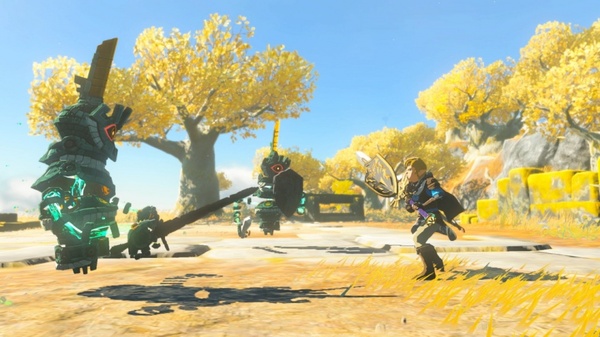
That's part of the charm. The game doesn't interrupt to explain these mechanics. It trusts players to notice when something feels unusual. If a group of flowers appears arranged too neatly or stretches across an area in a deliberate path, it's usually worth investigating.
5.3 Trees Can Be Suspicious Too
Breath of the Wild somehow turns fruit trees into puzzles, and I still think that's impressive.
Three nearby trees carrying different amounts of apples might not seem noteworthy at first glance. Then you realize they're meant to match each other, and suddenly you're standing in the middle of a forest carefully counting fruit like an amateur botanist.
It's ridiculous.
It's also oddly satisfying.
5.4 Why Koroks Work So Well
Korok puzzles aren't mechanically complex. What makes them memorable is the feeling that you discovered them rather than completed them. They reward observation instead of raw skill, encouraging players to slow down and pay attention to the world around them.
In a game filled with ancient monsters and legendary weapons, there's something refreshing about being rewarded simply for noticing that a rock looked slightly out of place.
6. Weapon Durability Secrets Worth Knowing
If I had to guess, weapon durability is probably responsible for thousands of Breath of the Wild players carrying powerful swords they never actually used.
I know I did.
6.1 Saving Everything Is Usually a Mistake
For most of my first playthrough, I treated rare weapons like precious artifacts that needed protecting. I kept telling myself I was saving them for an important fight.
The problem was that every major encounter seemed to introduce another powerful weapon shortly afterward.
Eventually, I realized Breath of the Wild wasn't encouraging hoarding. It was encouraging adaptation.
6.2 Not Every Enemy Deserves Your Best Gear
Learning when to use certain weapons makes a huge difference.
| Encounter Type |
Recommended Approach |
| Bokoblin camps |
Use common weapons |
| Lynels |
Equip stronger gear |
| Resource farming |
Preserve valuable equipment |
| Guardian battles |
Bring specialized tools |
Table 3. Smarter Weapon Choices for Different Situations
Note: The strongest weapon in your inventory isn't automatically the correct choice.
6.3 Creativity Can Save Durability
One of the easiest ways to preserve weapons is by using the environment more effectively.
Rolling boulders downhill, triggering explosive barrels, or knocking enemies into water often accomplishes the same objective without sacrificing valuable equipment. Breath of the Wild rewards efficiency, but it also rewards creativity.
Sometimes the best weapon is gravity.
6.4 Broken Weapons Aren't the End of the World
This might be the hardest lesson for new players to accept.
Weapons will break.
And that's okay.
Once you stop viewing durability as a punishment, you begin appreciating how it encourages experimentation. Instead of relying on one favorite sword forever, you're constantly adapting your strategy based on whatever Hyrule provides.
Surprisingly, combat becomes much more interesting because of it.
7. Shrine Exploration Tricks That Feel Clever
Some of my favorite memories in Breath of the Wild involve standing inside a shrine convinced that I had absolutely no idea what I was doing.
Then something unexpected worked.
7.1 The Intended Solution Isn't Always Necessary
Shrines often present problems that appear to have a single answer.
In reality, many puzzles allow for surprising flexibility. Players can manipulate momentum, abuse physics, or use abilities in unconventional ways to reach the same outcome.
The game rarely objects.
If anything, it seems quietly impressed.
7.2 Stasis Is More Versatile Than It Appears
Most players learn the basic function of Stasis early on.
It freezes objects.
Simple enough.
The real fun begins when you start experimenting with everything else it can do. Launching objects, redirecting movement, or creating entirely new solutions often turns frustration into satisfaction.

7.3 Overthinking Is Surprisingly Common
Some shrine solutions are genuinely challenging.
Others become difficult because players convince themselves the answer must be more complicated than it actually is.
If you've ever spent twenty minutes building an elaborate strategy before realizing you could simply move a platform in a straight line, you're definitely not alone.
7.4 Experimentation Usually Pays Off
The best advice for shrine exploration is simple:
Try things.
The game consistently rewards players willing to test ideas, even questionable ones. Failure rarely carries serious consequences, making shrines ideal spaces for creative problem-solving.
That willingness to experiment is one of Breath of the Wild's defining strengths.
8. Hidden Travel Secrets Across Hyrule
Fast travel is useful.
Breath of the Wild understands this perfectly.
However, relying on it too heavily can cause players to miss many of the experiences that make Hyrule feel alive.
8.1 Roads Lead to Unexpected Discoveries
One afternoon, I decided to ride from Kakariko Village to Hateno Village instead of teleporting.
It took longer.
It was also far more memorable.
Along the way, I encountered wandering merchants, found a Korok puzzle hidden near a bridge, and spotted a shrine sitting atop a hill I had somehow ignored before. The journey itself became the adventure.
8.2 Horses Encourage Slower Exploration
Horses naturally change the pace of the game.
Because you're moving more slowly, you notice details that fast travel tends to skip over. NPC encounters become easier to appreciate. Unusual landmarks stand out more clearly. Even familiar routes can reveal new surprises.
Sometimes slowing down enhances the experience.
8.3 Climbing Changes Perspective
One of the smartest habits players can develop is climbing before committing to a route.
A higher vantage point often reveals:
- Nearby shrines.
- Interesting landmarks.
- Safer pathways.
- Potential Korok locations.
Hyrule rewards preparation, but it also rewards curiosity.
8.4 The Best Detours Are Unplanned
The truth is that some of Breath of the Wild's greatest moments happen because players abandon their original objectives.
You leave a village intending to complete a quest.
Two hours later, you've discovered a hidden shrine, helped an NPC, chased a shooting star, and completely forgotten what you originally set out to accomplish.
Oddly enough, that's often when Breath of the Wild feels most magical.
Taken together, Korok puzzles, shrine experimentation, weapon durability, and slower travel all reinforce the same idea. Hyrule isn't a world designed to be rushed through as efficiently as possible. It's a place that rewards attention, experimentation, and the occasional willingness to follow a distraction simply because it looks interesting.
More often than not, those unexpected moments become the stories players remember long after the credits roll.
9. Enemy Behaviors That Reveal Hidden Depth
The first time I realized Breath of the Wild's enemies had routines of their own, I stopped thinking of them as obstacles and started seeing them as part of the world.
Until then, Bokoblins had simply been things standing between me and whatever treasure chest I was trying to reach. Then one evening, while sneaking through an enemy camp, I noticed half of them sleeping while the others gathered around a campfire.
It wasn't a scripted event.
It was just another detail Hyrule quietly included because someone at Nintendo apparently decided that monsters deserved bedtime schedules.
9.1 Bokoblins Have Lives Outside of Fighting Link
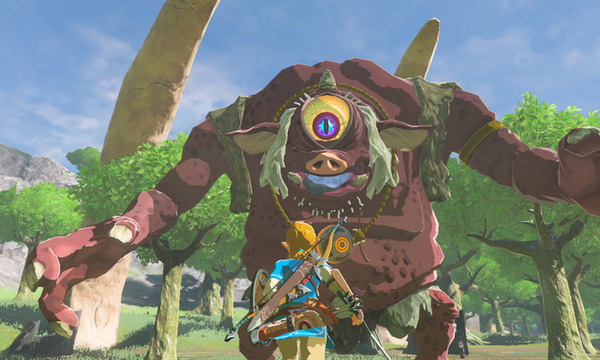
Enemies in Breath of the Wild don't spend every waking moment waiting for the player to appear. Depending on the time of day, you might find them cooking, resting, patrolling, or simply relaxing near a fire.
These small behaviors don't dramatically alter gameplay, but they make the world feel more believable. Hyrule isn't a theme park designed exclusively for Link's convenience. Life continues whether you're nearby or not.
9.2 Enemies Follow the Same Rules as Everyone Else
One of the game's smartest design choices is consistency.
Lightning doesn't care whether you're the hero of Hyrule or an unfortunate Bokoblin holding a metal sword during a thunderstorm. Fire spreads without asking for permission. Explosive barrels remain equally dangerous to both sides.
The first time I watched an enemy accidentally electrocute itself because it refused to drop its weapon, I laughed far harder than I probably should have.
Moments like that remind players that the world operates according to rules rather than scripted exceptions.
9.3 Not Every Encounter Requires Violence
As strange as it sounds, Breath of the Wild occasionally rewards players for avoiding combat altogether.
Sneaking through enemy camps, stealing supplies under the cover of darkness, or simply finding an alternate route can be just as satisfying as defeating every opponent in sight.
Sometimes the smartest strategy is asking:
"Do I actually need to fight these guys?"
Surprisingly often, the answer is no.
9.4 Small Behaviors Create a Living World
Individually, these details might seem insignificant.
Together, they transform enemy camps from static combat arenas into spaces that feel genuinely inhabited. The result is a world that feels less artificial and far more memorable.
After all, it's difficult to forget the time you interrupted a Bokoblin's nap.
10. The Joy of Solving Problems "Incorrectly"
If Breath of the Wild had an unofficial slogan, I suspect it would be:
"That wasn't the intended solution... but we'll allow it."
Some of the game's best moments emerge when players abandon conventional thinking and attempt something ridiculous.
10.1 Shrines Reward Creativity More Than Precision
Many shrine puzzles appear intimidating at first glance. Then someone discovers a completely different approach involving Stasis, questionable physics, and an alarming amount of confidence.
What makes these moments so enjoyable is that the game rarely punishes experimentation. If your solution works, Breath of the Wild often accepts it without complaint.
That flexibility turns problem-solving into self-expression.
10.2 Physics Can Become the Answer
At some point, every player discovers that Hyrule's physics system is far more robust than expected.
Objects carry momentum.
Forces interact.
Unexpected strategies occasionally outperform carefully planned ones.
The result is a game where players frequently solve problems by asking:
"What happens if I try this?"
Even when the answer is chaos, it's usually entertaining.
10.3 Improvisation Creates Better Stories
Nobody remembers following instructions perfectly.
People remember the time they launched themselves across a shrine because Plan A failed spectacularly. They remember accidentally discovering a shortcut while attempting something completely unrelated.
Improvisation transforms gameplay into storytelling.
The best moments often begin with:
"This probably won't work..."
10.4 Why Players Love These Moments
Breath of the Wild consistently allows players to feel clever.
Not because the game tells them they're clever, but because it gives them enough freedom to arrive at their own conclusions. Those victories feel personal precisely because they weren't handed to you.
And honestly, that's a lot more satisfying than simply pressing the correct button at the correct time.
11. Secrets Hidden Within the Weather System
Most games use weather to improve atmosphere.
Breath of the Wild turns it into gameplay.
At first, this can feel mildly inconvenient. Then you begin recognizing how these systems influence exploration, preparation, and decision-making throughout Hyrule.
11.1 Thunderstorms Change Everything
Few experiences in Breath of the Wild inspire panic quite like noticing sparks flying from Link's equipment.
The natural response is to unequip anything metallic before lightning arrives.
Eventually, however, players realize enemies face the same problem.
Suddenly, thunderstorms evolve from environmental hazards into strategic opportunities.
11.2 Rain Encourages Adaptation
Nobody enjoys slipping down the same cliff face for the fifth consecutive time.
Yet rain serves an important purpose.
It forces players to reconsider their plans. Maybe there's another route nearby. Perhaps this is the perfect opportunity to explore somewhere else before returning later.
Hyrule occasionally asks players to be flexible.
11.3 Temperature Rewards Preparation

Venturing into freezing mountains without proper equipment is rarely a good idea.
The same applies to volcanic regions where the environment itself becomes a threat.
Preparing meals, choosing armor wisely, and understanding regional hazards gradually becomes second nature. Survival in Breath of the Wild isn't about raw strength.
It's about paying attention.
11.4 Weather Makes Hyrule Feel Alive
The weather system matters because it introduces unpredictability.
The world doesn't pause until you're ready.
Rain arrives unexpectedly. Storms interrupt travel plans. Temperature shifts influence exploration.
Hyrule feels dynamic because it behaves independently of the player.
| Weather Condition |
Hidden Gameplay Impact |
| Thunderstorms |
Affect metal equipment and enemies |
| Rain |
Changes climbing strategies |
| Extreme Cold |
Requires preparation and planning |
| Extreme Heat |
Influences equipment choices |
Table 5. Weather Systems That Shape Exploration
Note: Weather in Breath of the Wild isn't just visual decoration. It actively influences how players navigate the world.
12. NPC Details That Make Hyrule Feel Alive
One of the easiest details to overlook in Breath of the Wild is the people inhabiting its world.
Players become so focused on shrines, Korok Seeds, and exploration that they occasionally forget to slow down and talk to someone twice.
Doing so is often worthwhile.
12.1 NPCs Follow Their Own Schedules
Villagers sleep at night.
Shopkeepers close their businesses.
Travelers move between destinations.
These routines aren't revolutionary, but they contribute enormously to immersion. Hyrule feels inhabited because its residents behave like people rather than information kiosks waiting patiently for Link's arrival.
12.2 Conversations Can Change
Returning to familiar characters occasionally reveals new dialogue options influenced by circumstances, timing, or story progression.
Most interactions remain small.
That's precisely why they work.
The game rarely demands attention for these details. It simply rewards players who notice them.
12.3 Small Stories Exist Everywhere
Some NPCs offer practical advice.
Others share rumors.
A few simply complain about their daily struggles while monsters roam the countryside.
Taken together, these conversations create a stronger sense of place. Hyrule becomes more than a collection of objectives.
It becomes home to people trying to navigate extraordinary circumstances.
12.4 Talking Twice Is Often Worth It
Breath of the Wild doesn't always place its most interesting details inside major quests.
Sometimes they appear during casual conversations players almost skipped.
If someone says something unusual, consider speaking with them again.
At worst, you'll lose a few seconds.
At best, you might uncover another reason to appreciate the care poured into this world.
By the time players reach this point in Breath of the Wild, a pattern begins to emerge. Enemies obey consistent rules. Weather systems influence decision-making. Shrines encourage creativity. NPCs continue living their lives regardless of Link's presence.
None of these elements would have the same impact individually.
Together, they create a version of Hyrule that feels genuinely alive. It's a world that rewards curiosity not because it constantly hands out powerful rewards, but because paying attention makes the experience richer.
Years later, that's what many players remember most.
Not just what they accomplished.
But the feeling that Hyrule always had one more surprise waiting around the next corner.
13. Exploration Habits That Improve Every Adventure
By the time I finished Breath of the Wild for the first time, I realized something surprising. The secrets that had impressed me most weren't tied to powerful weapons or hidden bosses. They came from small changes in how I approached exploration.
Hyrule didn't become more rewarding because I learned everything about it. It became more rewarding because I stopped trying to play efficiently.
13.1 Stop Treating Hyrule Like a Checklist
Open-world games have trained many of us to focus on objectives. We chase markers, complete activities, and move systematically from one task to the next.
Breath of the Wild works differently.
The moment I stopped asking, "What's the fastest way to complete this quest?" and started asking, "What's over there?" my experience improved dramatically. Progress slowed down, but the stories became much more memorable.
13.2 Follow Whatever Sparks Curiosity
One of the best pieces of advice I can give new players is to trust their instincts.
If something catches your attention, investigate it.
That unusual rock formation might hide a Korok puzzle. A column of smoke on the horizon could lead to an unexpected encounter. A mountain that simply "looks interesting" often rewards the climb.
Curiosity doesn't guarantee treasure.
It almost always guarantees an adventure.
13.3 The Best Detours Are Unplanned
I once set out to complete a straightforward quest near Kakariko Village.
Two hours later, I had discovered a shrine, chased a dragon across the sky, expanded my inventory with several Korok Seeds, and completely forgotten what I was originally trying to accomplish.
Oddly enough, I considered it one of my favorite sessions with the game.
Breath of the Wild excels at turning distractions into highlights.
13.4 Slow Down Occasionally
There is absolutely nothing wrong with fast travel.
At the same time, constantly teleporting across Hyrule can cause players to miss the details that make the world feel special.
Walking through forests, riding horseback between villages, or simply standing on a cliff to admire the view might not seem productive.
That's precisely the point.
Some experiences don't need optimization.
14. Secrets That Even Experienced Players Miss
One of the most remarkable things about Breath of the Wild is that players continue discovering new details years after its release.
This isn't because people weren't paying attention.
It's because Hyrule contains an extraordinary number of interconnected systems that quietly support exploration.
14.1 Some Mechanics Hide in Plain Sight
I've spoken to players who completed the game without realizing thunderstorms could affect enemies. Others never used fire to create updrafts or overlooked simple Korok puzzle patterns despite collecting hundreds of seeds.
None of these players were inexperienced.
They simply had different adventures.
That's one of Breath of the Wild's greatest strengths.
14.2 Revisiting Familiar Places Feels Different
Returning to earlier regions later in the game often reveals details that previously went unnoticed.
With additional stamina, improved equipment, and greater confidence, players naturally approach exploration differently. Areas that once felt intimidating become opportunities for discovery.
Hyrule evolves because the player evolves alongside it.
14.3 The Community Never Really Stopped Discovering Things
Years after launch, players still share stories about hidden interactions, unusual strategies, and overlooked details.
Sometimes they're genuinely surprising.
Sometimes they inspire a collective reaction of:
"Wait... you can actually do that?"
Few games sustain that level of curiosity for so long.
14.4 Replays Offer New Perspectives
Most open-world games lose some of their magic during repeat playthroughs because players already know what to expect.
Breath of the Wild tends to resist this pattern.
The world remains familiar, yet the experiences often differ dramatically. One playthrough might focus on efficient progression. Another might prioritize exploration. Someone else might spend half their time climbing mountains simply because they can.
Hyrule adapts surprisingly well to different playstyles.
15. What Breath of the Wild Teaches About Exploration
Looking back, I don't think Breath of the Wild's greatest achievement is the size of its world.
Plenty of games offer enormous maps.
What makes Hyrule memorable is how it encourages players to interact with that space.
15.1 Trusting Players Creates Better Stories
Breath of the Wild rarely interrupts to explain everything.
Instead, it trusts players to experiment, observe, and occasionally fail. That trust produces stories unique to each individual.
Ask a group of players about their favorite memory, and you'll rarely hear identical answers.
That's not accidental.
15.2 Discovery Feels Better Than Instruction
Finding a hidden shrine because someone placed a marker on your map is satisfying.
Finding one because you noticed something unusual in the landscape feels entirely different.
The sense of ownership becomes stronger when discoveries belong to the player.
Sometimes the most meaningful rewards aren't items.
They're moments of realization.
15.3 Hyrule Respects Curiosity
The game consistently acknowledges players willing to explore.
Strange landmarks invite investigation. Environmental systems encourage experimentation. Small details reward attention.
The message remains surprisingly consistent throughout the adventure:
"It's okay to wonder what happens if you try something unexpected."
15.4 Why People Still Talk About Breath of the Wild
Years after release, conversations about Breath of the Wild rarely revolve around statistics or optimal strategies.
Instead, people share stories.
The Lynel encounter they somehow survived.
The mountain they climbed for no reason.
The dragon they discovered entirely by accident.
The shrine solution that absolutely should not have worked but somehow did.
Those memories endure because they feel personal.
| Traditional Open Worlds |
Breath of the Wild |
| Objectives guide exploration |
Curiosity guides exploration |
| Efficiency is often rewarded |
Experimentation is rewarded |
| Solutions are predefined |
Creativity is encouraged |
| Players follow established paths |
Players create their own stories |
Table 6. Why Exploration Feels Different in Breath of the Wild
Note: Breath of the Wild doesn't abandon structure entirely. It simply allows curiosity to coexist alongside progression.
Frequently Asked Questions
What makes Breath of the Wild different from previous Zelda games?
Its open-world design emphasizes freedom, experimentation, and player-driven exploration rather than linear progression.
How do Korok Seeds work in Breath of the Wild?
Korok Seeds are collectibles earned by solving environmental puzzles. They can be exchanged with Hestu to expand weapon, bow, and shield inventory slots.
Can weapons be repaired in Breath of the Wild?
Most weapons cannot be repaired through conventional means, although certain special equipment can be reacquired later in the game.
How does cooking affect exploration in BOTW?
Cooking provides benefits such as increased stamina, additional hearts, environmental resistance, and temporary stat boosts that make exploration easier.
What are the best secrets to discover in Breath of the Wild?
Environmental interactions, hidden Korok puzzles, shrine shortcuts, and overlooked travel habits often provide the most memorable discoveries.
How can I explore Hyrule more effectively?
Slow down occasionally, investigate unusual landmarks, revisit familiar regions, and allow yourself to follow unexpected distractions.
What should I know before replaying Breath of the Wild?
Your second adventure will likely feel different from your first. Prioritize curiosity over efficiency and experiment more freely.
Why do so many players still love Breath of the Wild?
Because it consistently rewards attention, creativity, and exploration in ways that feel personal rather than scripted.
What are the most useful Breath of the Wild secrets?
Learning how environmental systems interact, recognizing Korok clues, and embracing experimentation can significantly improve the experience.
Why is exploration so rewarding in BOTW?
The game allows players to discover things naturally, creating stronger emotional connections to those experiences.
What hidden mechanics do players often miss?
Many overlook weather interactions, alternative shrine solutions, enemy behaviors, and subtle environmental clues tied to exploration.
How does Breath of the Wild encourage curiosity?
By trusting players to investigate, experiment, and learn through experience rather than relying heavily on tutorials and objective markers.
Conclusion
After spending hundreds of hours exploring Hyrule, I've come to believe that Breath of the Wild's greatest secret isn't hidden inside a shrine or guarded by a Lynel.
It's the realization that the game becomes better the moment you stop trying to rush through it.
Some of my favorite memories weren't planned. They happened because I climbed a mountain that wasn't part of a quest, followed a road instead of opening the map, or investigated something unusual simply because it looked interesting.
That's the magic of Breath of the Wild.
It rewards curiosity not with constant fanfare, but with stories that feel uniquely your own. Years later, many players struggle to remember exactly how many shrines they completed or how many Korok Seeds they collected.
They do remember the adventures they stumbled into by accident.
And perhaps that's why Hyrule continues to resonate with so many people. It isn't just a world designed to be completed.
It's a world designed to be explored.