If you played FIFA 23 for the first time after spending months with FIFA 22, chances are you noticed something felt... different.
Maybe your defenders seemed more composed when tracking runners. Perhaps your favorite winger no longer exploded past full-backs quite as effortlessly as before. Or maybe you conceded a late goal and immediately blamed the game's animations instead of your questionable defensive choices.
No judgment here. We've all been there.
When EA Sports introduced HyperMotion 2 ahead of FIFA 23's release, it was marketed as a major leap forward in gameplay realism. Promotional materials highlighted advanced motion capture techniques, machine learning, and thousands of new animations designed to make virtual football feel closer to the real thing.
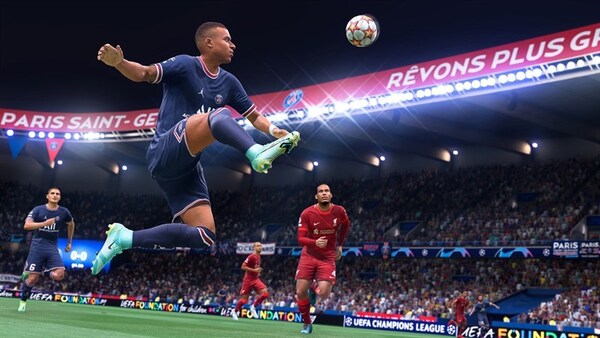
For some players, HyperMotion 2 delivered exactly that. Matches appeared more authentic, physical battles became more convincing, and movement felt less robotic.
Others weren't quite as enthusiastic.
Critics argued that realism had come at a cost. Gameplay sometimes felt slower. Certain animations appeared to reduce responsiveness. Some competitive players believed they had less control over crucial moments.
The truth, as is often the case with sports games, lies somewhere in the middle.
This article isn't here to repeat EA's marketing claims. Instead, we're going to explore what HyperMotion 2 actually is, how it changed FIFA 23, and whether those changes genuinely improved the football experience.
HyperMotion 2 is FIFA 23's gameplay technology designed to increase realism through enhanced motion capture and machine learning. It introduced more animations, improved player movement, and refined defensive interactions, although some players felt these improvements came at the expense of gameplay responsiveness.
1. What Is HyperMotion 2 in FIFA 23?
If you've ever tried explaining HyperMotion 2 to someone who doesn't play FIFA, you quickly realize how complicated it can sound.
Terms like "machine learning" and "motion capture" don't exactly scream weekend football entertainment.
Fortunately, the core idea is surprisingly simple.
The Basic Concept Behind HyperMotion 2
HyperMotion 2 is a gameplay technology used in FIFA 23 to make player movement and interactions appear more realistic. Rather than relying exclusively on handcrafted animations, EA expanded its use of real-world football data to generate a broader range of movements.
The goal wasn't just to make players look better.
It was to make them behave more naturally.
This included improvements to:
- running styles,
- physical contests,
- defensive reactions,
- first touches,
- transitional movement.
Why EA Developed HyperMotion 2
Football games constantly walk a difficult line between realism and entertainment.
If gameplay becomes too arcade-like, simulation fans complain. If realism dominates every aspect of the experience, others argue that the game becomes sluggish and less enjoyable.
EA's objective with HyperMotion 2 was to push FIFA closer toward authentic football without sacrificing accessibility entirely.
Whether they succeeded depends largely on who you ask.
Which Platforms Supported HyperMotion 2?
One important detail often overlooked is that HyperMotion 2 wasn't available across every version of FIFA 23.
The technology was introduced primarily on newer hardware platforms.
This meant that players using older systems sometimes encountered noticeably different gameplay experiences.
For many fans, this distinction generated confusion.
After all, two people could technically be playing FIFA 23 while describing two very different games.
2. How HyperMotion Evolved From FIFA 22 to FIFA 23
HyperMotion didn't begin with FIFA 23.
Its foundation had already been established one year earlier.
Understanding that evolution helps explain why FIFA 23 felt so distinct.
FIFA 22 Introduced the Concept
When FIFA 22 launched, HyperMotion represented EA's attempt to modernize football animations using advanced motion capture techniques.
The technology introduced:
- more contextual movement,
- improved player transitions,
- enhanced physical interactions.
Although the results were generally positive, players still identified areas requiring refinement.
FIFA 23 Expanded the Vision
HyperMotion 2 sought to build upon that foundation rather than reinvent it entirely.
According to EA, FIFA 23 featured significantly more motion-captured data than its predecessor, resulting in thousands of additional animations.
The intention was clear.
Football is unpredictable.
The game needed greater flexibility to represent that unpredictability convincingly.

More Data Doesn't Automatically Mean Better Gameplay
One misconception surrounding HyperMotion 2 is the assumption that additional animations guarantee superior gameplay.
Reality isn't quite so straightforward.
While increased animation variety can enhance immersion, excessive reliance on animations occasionally affects responsiveness.
This tension would eventually become one of FIFA 23's most discussed topics.
3. How HyperMotion 2 Actually Works
Let's address the intimidating terminology.
No, you don't need a computer science degree to understand HyperMotion 2.
Motion Capture Remains the Foundation
At its core, HyperMotion 2 depends heavily on real-world football movements.
Professional players perform actions that are recorded and translated into the game environment.
These movements include scenarios such as:
- sprinting,
- tackling,
- changing direction,
- shielding possession,
- contesting aerial duels.
Capturing authentic movement patterns helps reduce the stiffness that occasionally plagued older FIFA entries.
Machine Learning Helps Fill the Gaps
Football contains countless unpredictable situations.
Recording every possible scenario manually would be nearly impossible.
Machine learning assists by analyzing captured data and generating realistic transitions between animations.
The result is intended to feel less scripted.
Players move with greater fluidity because the system possesses more ways to connect individual actions naturally.

The Objective Was Increased Variety
Think back to older football games.
You may remember seeing the same tackle animation repeatedly or recognizing identical shooting sequences.
HyperMotion 2 attempted to reduce that repetition.
Greater variation contributes to authenticity because real football rarely unfolds in exactly the same manner twice.
That said, more variety occasionally introduces new challenges.
When players perceive certain animations as lengthy or restrictive, responsiveness becomes a point of discussion.
4. The Biggest Gameplay Changes Players Noticed
Technical explanations only matter if they influence actual gameplay.
This is where HyperMotion 2 became impossible to ignore.
Even casual players often noticed that FIFA 23 felt different.
Movement Became More Deliberate
One of the most immediate observations involved player movement.
Compared with FIFA 22, FIFA 23 often appeared:
- slightly slower,
- more measured,
- less frantic.
For simulation enthusiasts, this represented progress.
For others, particularly those who favored faster gameplay, adjustment periods proved challenging.
Defensive Structure Improved
Defensive interactions benefited from expanded animation systems.
Challenges looked more convincing.
Defenders appeared better equipped to contest physical battles.
Positioning often seemed more disciplined.
Of course, no FIFA community discussion would be complete without someone insisting that defenders still possessed the spatial awareness of shopping carts.
Progress doesn't eliminate criticism.

Physical Battles Felt More Authentic
HyperMotion 2 strengthened the visual representation of football's physical nature.
Players jostled for possession with greater nuance.
Body positioning mattered more consistently.
Momentum influenced outcomes in ways that previous titles occasionally struggled to replicate.
These changes enhanced immersion, even if they occasionally frustrated players accustomed to different gameplay rhythms.
The Realism Debate Intensified
Perhaps the most important consequence of HyperMotion 2 wasn't any individual mechanic.
It was the conversation surrounding realism itself.
What should a football game prioritize?
Should authenticity always take precedence?
Or should responsiveness and enjoyment occasionally outweigh simulation accuracy?
FIFA 23 didn't answer those questions definitively.
If anything, HyperMotion 2 ensured that players would continue debating them long after the final whistle.
5. How HyperMotion 2 Changed Dribbling
Ask ten FIFA players to describe dribbling in FIFA 23, and you'll probably receive twelve different answers.
Some praised the added realism, arguing that attackers could no longer glide through defenses with superhero-like agility. Others felt their favorite skillful players had suddenly forgotten how to turn without submitting a formal request three business days in advance.
As usual, the truth lies somewhere between those extremes.
Technical Dribbling Became More Contextual
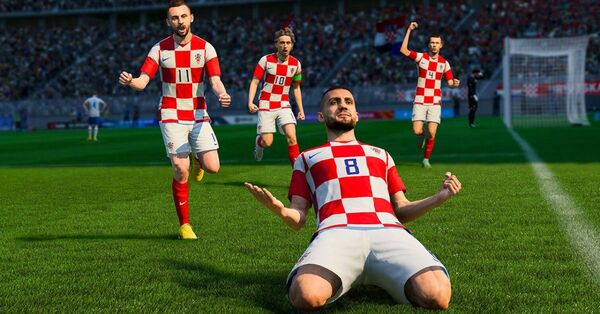
One noticeable change involved the way players carried the ball under pressure. HyperMotion 2 expanded the number of transitional animations available during dribbling sequences, allowing movement to appear more fluid and varied.
This resulted in situations where attackers adjusted their body shape more naturally depending on:
- defensive pressure,
- movement direction,
- ball position,
- surrounding space.
The outcome often looked more authentic from a visual standpoint.
Responsiveness Became a Talking Point
While increased realism appealed to many players, others noticed a different side effect.
Additional animations occasionally created the perception that players were slightly slower to respond to commands. This didn't necessarily mean the game was objectively less responsive, but the sensation itself influenced how people experienced FIFA 23.
In competitive environments, perception matters.
If players believe control has diminished, frustration usually follows.
Skill Moves Still Had Their Place
Despite concerns about pacing, skillful dribbling remained effective when used intelligently.
The difference was that timing became increasingly important. Randomly chaining elaborate skill moves rarely produced consistent success against organized defenses.
Instead, effective dribblers often focused on:
- exploiting isolated defenders,
- changing tempo strategically,
- recognizing favorable matchups,
- creating separation through positioning rather than constant flair.
It turns out that football, both virtual and real, occasionally rewards restraint.
6. Defensive Improvements Under HyperMotion 2
If attackers noticed changes in dribbling, defenders arguably experienced even greater transformations.
For years, FIFA communities have shared a complicated relationship with defending. Every installment seems to generate passionate discussions about whether defenders are overpowered, underpowered, or somehow both simultaneously.
FIFA 23 continued that tradition.
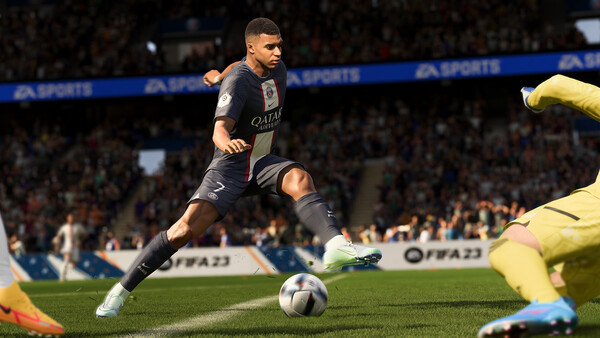
Tackles Looked More Convincing
One immediate benefit of HyperMotion 2 involved visual authenticity.
Defensive actions featured greater animation variety, helping reduce the repetitive interactions that occasionally appeared in previous titles.
Challenges looked heavier.
Recoveries appeared more realistic.
Physical confrontations carried additional weight.
These changes strengthened immersion, even if they didn't eliminate every questionable defensive moment.
Positioning Received More Attention
Defensive shape often felt more organized compared with earlier entries.
Players seemed better equipped to:
- track opposing runs,
- maintain structural integrity,
- recover into appropriate positions,
- support teammates during transitions.
Naturally, individual experiences varied depending on tactical preferences and difficulty settings.
However, many players acknowledged that defending demanded greater patience than before.
Aggression Required Greater Discipline
One common adjustment involved tackling frequency.
Overcommitting aggressively often created vulnerabilities because attackers possessed increased opportunities to exploit defensive mistakes.
Successful defenders tended to emphasize:
- timing,
- anticipation,
- containment,
- intelligent positioning.
This represented a shift away from constant pressure toward calculated intervention.
Whether that change improved gameplay remains subjective.
What cannot be denied is that it altered defensive decision-making significantly.
7. Passing and Ball Physics Enhancements
Passing rarely dominates marketing campaigns.
No one rushes online proclaiming:
"You absolutely have to see this revolutionary five-yard sideways pass."
Yet passing systems fundamentally shape how football games feel.
HyperMotion 2 quietly introduced several refinements that influenced match flow in meaningful ways.
First Touches Became More Dynamic
Older FIFA titles occasionally struggled to represent the unpredictability of receiving possession.
In FIFA 23, first touches appeared more varied.
Factors influencing control included:
- player attributes,
- movement momentum,
- defensive proximity,
- pass trajectory.
Elite players frequently demonstrated cleaner receptions, while others exhibited occasional imperfections.
In other words, footballers started behaving more like actual human beings.
Ball Movement Felt More Organic
The relationship between players and the ball benefited from increased nuance.
Passes carried different levels of urgency.
Deflections produced varied outcomes.
Physical interactions occasionally generated moments of delightful chaos.
Not every bounce unfolded predictably.
Oddly enough, that unpredictability often enhanced authenticity.
Build-Up Play Encouraged Patience
FIFA 23 generally rewarded structured possession more than relentless vertical attacks.
Players willing to circulate the ball thoughtfully often discovered opportunities that rushed approaches overlooked.
This encouraged greater tactical diversity.
At least until someone attempted a thirty-yard trivela from an angle that defied both physics and common sense.
Football games remain football games, after all.
8. Why FIFA 23 Felt Slower to Some Players
Few criticisms emerged more consistently throughout FIFA 23's lifecycle than the perception of reduced pace.
Whether accurate or exaggerated, these conversations shaped community attitudes toward HyperMotion 2.
Realism and Speed Often Compete
Authentic football rarely resembles the end-to-end chaos occasionally found in earlier FIFA entries.
Real matches involve:
- controlled possession,
- strategic positioning,
- deliberate transitions,
- moments of patience.
HyperMotion 2 attempted to embrace those principles.
For simulation enthusiasts, this represented progress.
For players who preferred immediate explosiveness, adaptation proved challenging.
Animation Density Influenced Perception
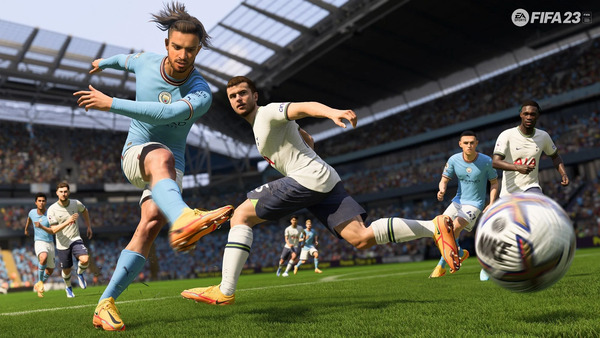
Greater animation variety enhanced realism but occasionally contributed to concerns surrounding responsiveness.
Even marginal delays between inputs and outcomes can affect player perception dramatically.
As a result, some users interpreted enhanced authenticity as reduced control.
The distinction between objective reality and subjective experience became increasingly blurred.
Expectations Shaped Reactions
Players don't approach FIFA with identical priorities.
Some value immersion above all else.
Others prioritize competitiveness and responsiveness.
Because HyperMotion 2 attempted to balance those objectives simultaneously, universal approval was always unlikely.
| Gameplay Element |
FIFA 22 |
FIFA 23 |
| Match Tempo |
Faster |
More measured |
| Dribbling Feel |
More explosive |
More deliberate |
| Defensive Structure |
Less disciplined |
More organized |
| Animation Variety |
Moderate |
Expanded significantly |
| Physical Realism |
Lower emphasis |
Greater emphasis |
Table 1. Perceived Gameplay Differences Between FIFA 22 and FIFA 23
Note: Individual experiences may differ depending on playstyle, difficulty settings, and preferred game modes.
9. Casual Players vs Competitive Players
One fascinating aspect of the HyperMotion 2 discussion involved the diversity of community perspectives.
Not everyone evaluates FIFA using the same criteria.
And perhaps they shouldn't.
Casual Players Often Prioritized Immersion
Many casual audiences embraced FIFA 23's emphasis on authenticity.
Improved movement patterns, enhanced physical battles, and expanded animation libraries contributed to an experience that felt closer to televised football.
For these players, realism itself possessed value.
Winning mattered.
Enjoyment mattered more.
Competitive Communities Focused on Control
Competitive players approached HyperMotion 2 differently.
Their priorities frequently included:
- responsiveness,
- consistency,
- skill expression,
- predictability.
Even subtle alterations affecting these areas attracted scrutiny because high-level environments magnify every perceived disadvantage.
When margins become razor-thin, small frustrations grow rapidly.
Neither Perspective Is Wrong
Perhaps the most important lesson from FIFA 23's HyperMotion debate is that multiple truths can coexist.
A feature can improve immersion while simultaneously frustrating competitive audiences.
Realism can enhance enjoyment for some players while diminishing it for others.
Context matters.
Personal preference matters.
Ultimately, HyperMotion 2 succeeded in generating conversations that extended far beyond technical specifications.
Because beneath every discussion about machine learning and motion capture lies a much simpler question:
What do players actually want football games to feel like?
FIFA 23 didn't provide a universally accepted answer.
But it certainly encouraged everyone to think about the question more carefully.
10. Did HyperMotion 2 Improve Immersion?
One area where HyperMotion 2 received fairly widespread praise was immersion.
Even players who criticized aspects of FIFA 23's responsiveness often acknowledged that the game looked and felt more authentic than previous installments.
Of course, authenticity in sports games is a slippery concept.
Some people associate immersion with visual presentation. Others focus on gameplay behavior. For many FIFA fans, it's a combination of both.
Player Interactions Felt More Natural
Football is a physical sport filled with subtle movements that rarely appear in highlight reels.
Players jockey for position before corners. Defenders lean into attackers while contesting possession. Midfielders shield the ball while waiting for support.
HyperMotion 2 attempted to capture more of those small moments.
As a result, matches often appeared less robotic and more spontaneous.
Match Presentation Benefited Too
Although HyperMotion 2 primarily targeted gameplay, its influence extended into the overall atmosphere.
Moments such as:
- goal celebrations,
- emotional reactions,
- physical collisions,
- transitional sequences,
contributed to a stronger sense of authenticity.
FIFA has always excelled at presentation.
FIFA 23 simply added another layer of polish.
Realism Doesn't Guarantee Enjoyment
This distinction remains important.
A game can become more immersive without becoming universally more enjoyable.
Some players happily traded speed for authenticity.
Others longed for the immediacy of previous entries.
Immersion matters.
It just isn't the only thing that matters.
11. FIFA 22 vs FIFA 23: Which Felt More Realistic?
Comparisons between FIFA entries are inevitable.
Every annual release prompts familiar questions:
Is this actually better?
Or is it just different?
HyperMotion 2 ensured that FIFA 23 would invite even more scrutiny than usual.
FIFA 22 Favored Fluidity
Many players remember FIFA 22 as being slightly faster and more reactive.
Dribbling often felt sharper.
Attacking transitions occurred more rapidly.
The game rewarded quick decision-making and explosive movement.
For players who valued responsiveness, FIFA 22 retained considerable appeal.
FIFA 23 Emphasized Authenticity
FIFA 23 approached football differently.
Possession became more deliberate.
Defensive structure carried greater importance.
Physical interactions received additional attention.
The experience occasionally resembled real football more closely, even if it required adjustment.
Better Doesn't Always Mean Universal
One lesson the FIFA community relearns every year is that preferences differ.
Simulation-focused players frequently appreciated FIFA 23's philosophy.
Others simply wanted a football game that felt exciting and immediate.
Both perspectives are reasonable.
| Category |
FIFA 22 |
FIFA 23 |
| Gameplay Identity |
Faster-paced |
More methodical |
| Defensive Behavior |
Aggressive |
More structured |
| Animation Diversity |
Moderate |
Extensive |
| Physical Encounters |
Simplified |
Enhanced |
| Overall Realism |
Strong |
Improved further |
Table 2. FIFA 22 vs FIFA 23 Realism Comparison
Note: Perceptions of realism vary depending on player expectations and preferred game modes.
12. How the FIFA Community Reacted to HyperMotion 2
If you ever want to witness passionate disagreement, ask FIFA players whether the latest gameplay changes improved the series.
Then stand back.
HyperMotion 2 generated some of FIFA 23's most memorable discussions.
Early Impressions Were Divided
Shortly after release, opinions varied dramatically.
Some players praised:
- improved defensive structure,
- more authentic movement,
- enhanced immersion.
Others criticized:
- slower gameplay,
- heavier dribbling,
- perceived input delays.
Both groups often felt equally convinced they were objectively correct.
Opinions Shifted Over Time
As players adapted, certain criticisms softened.
Others intensified.
This isn't unusual.
Competitive communities frequently require time to understand how systemic changes influence gameplay.
Initial frustration doesn't always persist indefinitely.
Neither does early enthusiasm.
The Conversation Reflected Broader Questions
Perhaps the most interesting aspect of the HyperMotion debate involved the themes beneath it.
Players weren't merely discussing animations.
They were debating philosophy.
Should FIFA prioritize realism?
Should it prioritize responsiveness?
Can it realistically satisfy both objectives simultaneously?
Those questions remain relevant today.
13. What Professional Players Thought About HyperMotion 2
Professional FIFA players occupy an unusual position within the community.
Their livelihood depends on mastering systems that casual players experience recreationally.
As a result, their perspectives often differ.
Adaptation Became Essential
Competitive players quickly recognized that established habits required adjustment.
Success in FIFA 23 often demanded:
- improved patience,
- stronger positional awareness,
- more disciplined defending,
- refined decision-making.
The game rewarded different strengths than some predecessors.
Consistency Mattered More Than Spectacle
Professional competitors generally value reliability.
They want outcomes that align closely with skill expression.
When animations occasionally influenced results unpredictably, concerns emerged.
At elite levels, even minor inconsistencies attract attention.
Competitive Feedback Helped Shape Discussions
Professional opinions inevitably influenced broader community conversations.
However, it's important to remember that professional priorities don't always align with casual expectations.
The average player may prioritize entertainment.
Professionals prioritize competitive integrity.
Both viewpoints contribute valuable insights.
14. Did HyperMotion 2 Deliver on EA's Promises?
Marketing campaigns thrive on optimism.
Every new feature promises transformation.
HyperMotion 2 was no exception.
So, did it succeed?
Technically, the Improvements Were Significant
From a purely technical perspective, HyperMotion 2 represented genuine advancement.
Achievements included:
- expanded animation libraries,
- more realistic player interactions,
- improved movement variety,
- stronger visual authenticity.
The technology wasn't merely cosmetic.
It influenced gameplay meaningfully.
Community Satisfaction Was More Complicated
Technological progress doesn't automatically guarantee universal approval.
Some players embraced the direction FIFA 23 pursued.
Others preferred the pacing and responsiveness of earlier entries.
Enjoyment remains subjective.
No amount of machine learning changes that reality.
Expectations Influenced Perception
One reason opinions differed so dramatically involved expectations.
Players hoping for a football simulation often celebrated HyperMotion 2.
Players expecting arcade-style excitement occasionally expressed disappointment.
Neither group misunderstood the game.
They simply valued different experiences.
15. How HyperMotion 2 Influenced the Future of Football Games
FIFA 23 represented the final chapter in EA's partnership with FIFA.
However, HyperMotion 2's influence extended beyond that moment.
Realism Became a Clear Priority
The technology reinforced EA's commitment to authenticity.
Future football titles would likely continue exploring:
- advanced motion systems,
- contextual animations,
- machine learning applications,
- immersive presentation techniques.
The pursuit of realism wasn't ending.
If anything, it was accelerating.
Player Expectations Evolved
Once audiences experience improved animation quality, reverting backward becomes difficult.
Features that once seemed revolutionary gradually become standard expectations.
Innovation resets baselines.
HyperMotion 2 contributed to that process.
The Balance Challenge Remains
Future football games still face the same dilemma.
How do developers create experiences that feel authentic while remaining enjoyable and responsive?
There may never be a perfect answer.
The challenge itself drives evolution.
16. Final Verdict: Did HyperMotion 2 Improve FIFA 23?
After countless matches, community debates, and comparisons with previous entries, one conclusion becomes increasingly clear:
HyperMotion 2 changed FIFA 23 substantially.
Whether those changes constituted improvement depends partly on what players wanted from the experience.
What HyperMotion 2 Did Well
Its strengths included:
- increased animation diversity,
- stronger physical realism,
- improved defensive interactions,
- enhanced immersion.
Matches frequently looked more authentic than before.
Where It Struggled
Not every consequence proved positive.
Criticisms centered around:
- perceived responsiveness concerns,
- slower gameplay pacing,
- adaptation challenges for experienced players.
These frustrations weren't imagined.
They reflected legitimate differences in preference.
Who Benefited Most?
Generally speaking:
| Player Type |
Likely Experience |
| Simulation Fans |
Mostly positive |
| Casual Players |
Positive to mixed |
| Competitive Players |
Mixed |
| Arcade-Oriented Players |
More critical |
Table 3. HyperMotion 2 Reception Across Different Audiences
Note: Individual experiences vary based on expectations, playstyle, and preferred game modes.
The Bigger Picture
HyperMotion 2 wasn't perfect.
It wasn't revolutionary in every sense of the word.
But it represented an ambitious attempt to push football games toward greater authenticity.
Perhaps its greatest achievement wasn't settling debates about realism.
It was starting them.
Because every time FIFA evolves, players ask the same question:
What should virtual football actually feel like?
FIFA 23 didn't answer that question definitively.
What it did accomplish was moving the conversation forward.
And sometimes, progress looks exactly like that.